Concrete Patios
Create an outdoor living space you will use and enjoy for years with a custom concrete patio.
Why a Concrete Patio Makes Sense
Your backyard should be a place where you actually want to spend time. A well-designed patio extends your living space outdoors and creates a spot for morning coffee, family dinners, or weekend gatherings. Concrete makes an excellent patio material because it lasts decades, requires little maintenance, and costs less than wood decking or natural stone.
The Southern California climate is perfect for outdoor living. We get sun most days of the year in Hacienda Heights. A concrete patio lets you take advantage of that weather without tracking dirt into your house or dealing with muddy grass. Concrete creates a clean, stable surface that stays comfortable barefoot and drains water quickly after our occasional rains.
Unlike wood decks that need staining every few years or pavers that shift and grow weeds, concrete patios need minimal upkeep. Sweep them occasionally and hose them down when they get dirty. Seal them every few years to maintain the finish. That is about it. You spend your time enjoying the patio instead of maintaining it.
Concrete patios also add value to your home. Real estate agents consistently say that outdoor living spaces help homes sell faster and for better prices. A quality patio suggests that the home has been well cared for. It gives potential buyers a vision of how they could enjoy the property. Even if you are not planning to sell soon, a patio improves your daily life and protects your investment.
Design Options for Your Patio
Modern concrete patios offer more design flexibility than most people realize. You can create something simple and functional or elaborate and decorative depending on your budget and style preferences. Here are the main options we offer:
Standard Broom Finish Patios
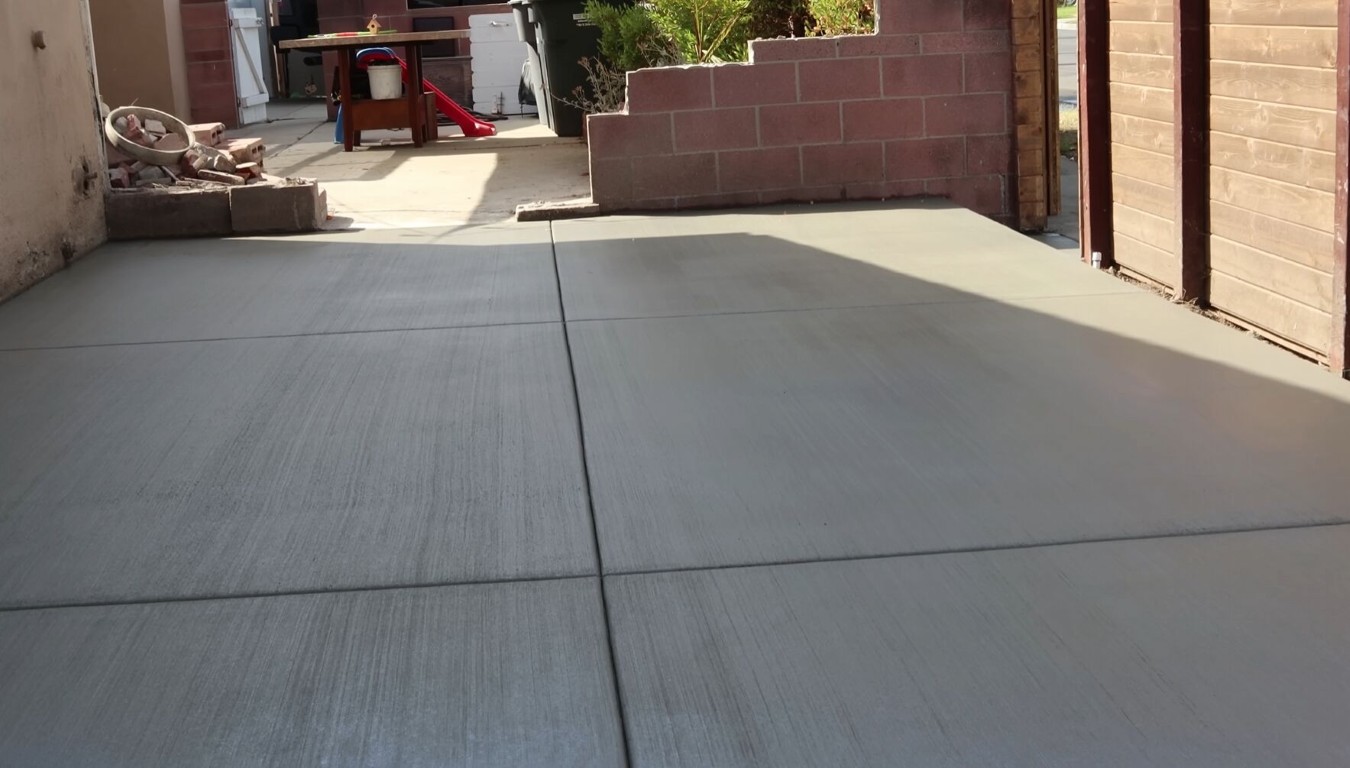
A broom finish patio is the most economical option and still looks great. We pour the concrete, smooth it out, then drag a broom across the surface to create texture. This texture provides traction when the patio is wet and gives it a clean, finished appearance. Broom finish patios work particularly well for casual outdoor spaces where function matters more than elaborate decoration.
You can add visual interest to a broom finish patio with borders, saw-cut patterns, or simple color. We might pour the main area in light gray and add a darker border around the edges. Or we can cut geometric patterns into the surface that create definition without adding much cost. These simple touches elevate a basic patio into something more intentional and polished.
Colored Concrete Patios
Adding color to concrete costs more than plain gray but dramatically changes the appearance. We can create earth tones that blend with landscaping, warm terracotta shades that evoke Mediterranean style, or cool grays that feel contemporary. The color goes throughout the concrete mix, so it will not wear off or fade quickly.
Colored concrete works especially well when you coordinate it with your home's exterior. If your house has warm beige tones, a tan or brown patio ties everything together. Cooler gray house colors pair nicely with slate or charcoal patios. We help you choose colors that complement your existing landscape and architecture rather than fighting against them.
Stamped Concrete Patios
Stamped concrete creates the look of stone, tile, or brick at a lower cost than using those actual materials. We can replicate flagstone, slate, cobblestone, wood planks, or dozens of other patterns. The stamping process adds texture and visual interest that makes your patio feel more upscale and custom. If you want more information about stamped options, check out our detailed guide on stamped and decorative concrete.
Exposed Aggregate Patios
Exposed aggregate reveals the stones in the concrete mix, creating a natural, textured surface. This finish hides stains and dirt better than smooth concrete. It also provides excellent traction and feels interesting under bare feet. Exposed aggregate comes in different stone sizes and colors. You can choose rounded pea gravel for a softer look or angular crushed stone for more texture.
This finish works particularly well around pools or in high-traffic areas because it wears so well. The textured surface also stays cooler than smooth concrete, which makes it more comfortable on hot days. Many customers choose exposed aggregate for its combination of durability, traction, and natural appearance.
Planning Your Patio Layout
The size and shape of your patio matter as much as the finish you choose. A patio needs to be large enough to be useful but proportional to your yard and home. Here is what we consider when helping customers plan their patio:
Think about how you will use the space. A small breakfast table needs at least 10 by 10 feet. A dining table that seats six requires 12 by 14 feet minimum. Add space for a grill, and you need even more room. We recommend going slightly larger than you think you need. Patios always feel smaller once you add furniture.
The shape should work with your yard and house. Rectangular patios suit most backyards and use space efficiently. Curved edges create a softer, more organic feel that blends with landscaping. Multi-level patios work well on sloped lots or to define different activity zones. We can combine shapes too, like a main rectangular area with a curved sitting area off to one side.
Consider how the patio connects to your house. Most patios attach directly to the back door, which makes them easy to access. Make sure the patio sits slightly lower than your door threshold so water drains away from the house. We typically drop the patio about an inch or two below the door and slope it away from the building. This simple detail prevents water problems that could affect your home's foundation.
Think about sun and shade patterns too. Watch where the sun hits your backyard at different times of day. You might want part of your patio in shade for hot afternoons. Plan for a pergola, umbrella, or other shade structure when designing the layout. Leave space for planters or landscaping that will make the patio feel integrated with your yard rather than just plopped down in the middle of it.
The Patio Installation Process
Building a patio that lasts requires proper preparation and execution. We follow a systematic process that has been refined over years of patio work in Hacienda Heights:
- •Site evaluation: We assess your soil conditions, drainage patterns, and access for equipment. Some yards have challenging access that affects how we approach the project. We identify potential problems before we start digging.
- •Layout and excavation: We mark the patio outline with stakes and string, then excavate to the proper depth. The excavation needs to be deep enough for base material and concrete thickness. We grade the excavated area so water drains correctly.
- •Base installation: A four to six inch layer of crushed gravel provides drainage and prevents settling. We compact this base thoroughly in layers. Proper compaction is critical for long-term patio performance.
- •Form building: Wood or metal forms hold the concrete in the right shape while it cures. We set forms at the exact height and slope needed for proper drainage. The forms also create clean, straight edges for your patio.
- •Reinforcement: We install wire mesh or rebar to strengthen the concrete. Reinforcement holds cracks together if they develop and prevents the patio from breaking apart. Skipping this step saves a few dollars but risks expensive repairs later.
- •Concrete placement: We pour and spread the concrete quickly before it starts setting. Our crew screeds it level, then uses floats and trowels to create a smooth surface. If you chose a decorative finish, we apply it at this stage.
- •Curing and sealing: The concrete needs at least seven days to cure before you use it. After it cures, we clean the surface and apply sealer. The sealer protects against stains and weather while enhancing the appearance.
The entire process typically takes three to five days from excavation to finishing, plus curing time. Weather affects the schedule. We will not pour concrete if rain is forecast because it can ruin the finish. Hot weather requires extra precautions to keep concrete from curing too fast. We plan around weather and keep you informed of any schedule changes.
Access to your backyard matters too. If we cannot get equipment through side gates, we might need to carry materials through your house or bring in smaller equipment. This adds time and cost. When we give you an estimate, we factor in your specific site conditions so there are no surprises. Similar to our driveway installations, we handle all the logistics and clean up thoroughly when finished.
Frequently Asked Questions About Concrete Patios
Here are the questions we hear most often from homeowners planning a patio project: