Garage Floors & Epoxy Coatings
Transform your garage floor from dull and stained to clean and professional-looking with durable epoxy coatings.
Why Garage Floor Coatings Make Sense
Most garage floors are bare concrete that stains easily, collects dust, and looks dingy no matter how often you clean it. Oil drips from cars permanently mark the surface. Tire marks create black streaks. The concrete slowly deteriorates from moisture, chemicals, and temperature changes. A quality floor coating solves all these problems while making your garage look dramatically better.
Epoxy and polyurethane coatings create a tough, sealed surface over your concrete. Liquids cannot penetrate, so oil, antifreeze, and other chemicals just sit on top where you can wipe them away. The coating resists staining, abrasion, and chemical damage far better than bare concrete. It also makes your garage easier to clean. Sweeping and mopping become quick tasks instead of frustrating battles against ingrained dirt. A properly applied garage floor concrete coating bonds directly to the slab and holds up through years of daily use.
The appearance improvement is striking. A coated garage floor looks clean and professional. You can choose from various colors and finishes, from subtle grays to bold solid colors with decorative flakes. Many Hacienda Heights homeowners tell us their garage became a space they actually enjoy spending time in after we coated the floor. Some even use their garage for workshops, home gyms, or extra living space once the floor looks good.
Coatings also add value to your home. A well-maintained garage with a professional floor coating suggests that the entire home has been cared for properly. Real estate agents consistently say that finished garage floors help homes show better and can contribute to faster sales. Whether you plan to sell soon or stay for years, a garage floor coating is an investment that pays back through improved functionality and appearance.
Types of Garage Floor Coatings
Several coating options exist for garage floors. Each has different characteristics that make it suitable for specific situations:
Epoxy Coatings
Epoxy is the most popular garage floor coating. It consists of resin and hardener that mix together and cure into an extremely hard, durable surface. Properly applied epoxy bonds tightly to concrete and resists impacts, abrasion, and chemicals. It comes in various colors, and you can add decorative colored flakes that create a speckled appearance while adding texture.
Standard epoxy coatings work well for most residential garages. They provide excellent protection at reasonable cost. The main limitation is that epoxy can yellow over time if exposed to UV light, though this matters less in garages than outdoor applications. Epoxy also becomes somewhat brittle in very cold temperatures, which is rarely an issue in Hacienda Heights. We use commercial-grade epoxy products that outperform the DIY kits sold at home improvement stores.
Polyurethane Coatings
Polyurethane coatings are tougher and more flexible than epoxy. They resist UV yellowing, abrasion, and chemicals even better than epoxy. Polyurethane also has more flexibility, which helps it resist cracking if the concrete underneath develops small cracks. The main disadvantage is cost. Polyurethane costs more than epoxy for materials and requires more skill to apply properly.
We often use a hybrid approach, applying epoxy as a base coat and polyurethane as a top coat. This combines epoxy's good bonding characteristics and lower cost with polyurethane's superior durability and UV resistance. The polyurethane top coat also provides a glossier finish that many customers prefer. This two-layer system gives you the best characteristics of both materials.
Polyaspartic Coatings
Polyaspartic is a newer coating technology that cures extremely fast. You can drive on polyaspartic coatings within 24 hours, compared to several days for epoxy. These coatings resist UV yellowing, chemicals, and abrasion excellently. They work well in a wider temperature range than epoxy, making application easier. The fast cure time means your garage is out of service for minimal time.
The downside is that polyaspartic coatings cost more than traditional epoxy. They also require experienced application because the fast cure time leaves little room for error. For customers who cannot have their garage unusable for several days, polyaspartic makes sense despite higher cost. For most residential applications, the advantages of epoxy or epoxy-polyurethane systems outweigh the benefits of polyaspartic.
Our Garage Floor Coating Process
Quality results depend heavily on proper surface preparation and application techniques. Here is how we approach garage floor coating projects:
- •Thorough cleaning: We start by removing all dirt, oil, grease, and contaminants from the concrete. This typically involves degreasing chemicals and pressure washing. Any substances on the concrete prevent the coating from bonding properly. We spend significant time on this step because it determines whether the coating will last.
- •Surface profiling: Concrete needs texture for coatings to grip properly. We use diamond grinders or acid etching to open the concrete pores and create a rough surface. This mechanical or chemical profiling ensures maximum adhesion. Smooth concrete will not hold coatings well regardless of the product quality.
- •Crack and damage repair: Any cracks, chips, or damaged areas get repaired before coating. We fill cracks with epoxy fillers that bond to the existing concrete and create a smooth surface. Coating over unrepaired damage just highlights the problems and often leads to coating failure at those spots.
- •Primer application: A primer coat goes down first to enhance adhesion and seal the concrete. The primer penetrates into the concrete pores and provides a strong foundation for subsequent coating layers. Some coating systems do not require primers, but we use them for maximum durability on garage floors.
- •Base coat application: The main coating layer goes on next. We apply it evenly across the entire floor, working in sections to maintain proper thickness. If you want decorative flakes, we broadcast them into the wet coating while it is still tacky. The flakes embed in the coating and add color variation and texture.
- •Top coat sealing: A clear top coat seals everything and provides the final appearance and protection. The top coat determines the gloss level, from matte to high gloss. It also adds an extra layer of chemical and abrasion resistance. Multiple thin coats work better than one thick coat.
Timing and temperature control matter during application. Coatings cure at different rates depending on temperature and humidity. We schedule work when conditions are optimal. Applying coatings in extreme heat or cold leads to problems. Most coating systems need at least 24 hours between coats, and some require several days of curing before you can park vehicles on them. We give you clear timelines so you can plan around your garage being unavailable.
Choosing Colors and Finishes
Your garage floor coating can be as simple or elaborate as you want. Here are the main appearance options:
Solid colors create a clean, uniform appearance. Gray is most popular because it hides dirt well and looks professional. Tan and beige provide warmer tones that some homeowners prefer. Darker colors like charcoal or black create a sleek, modern look but show dust more readily. We can match any color you have in mind, though neutral tones work best for most garages.
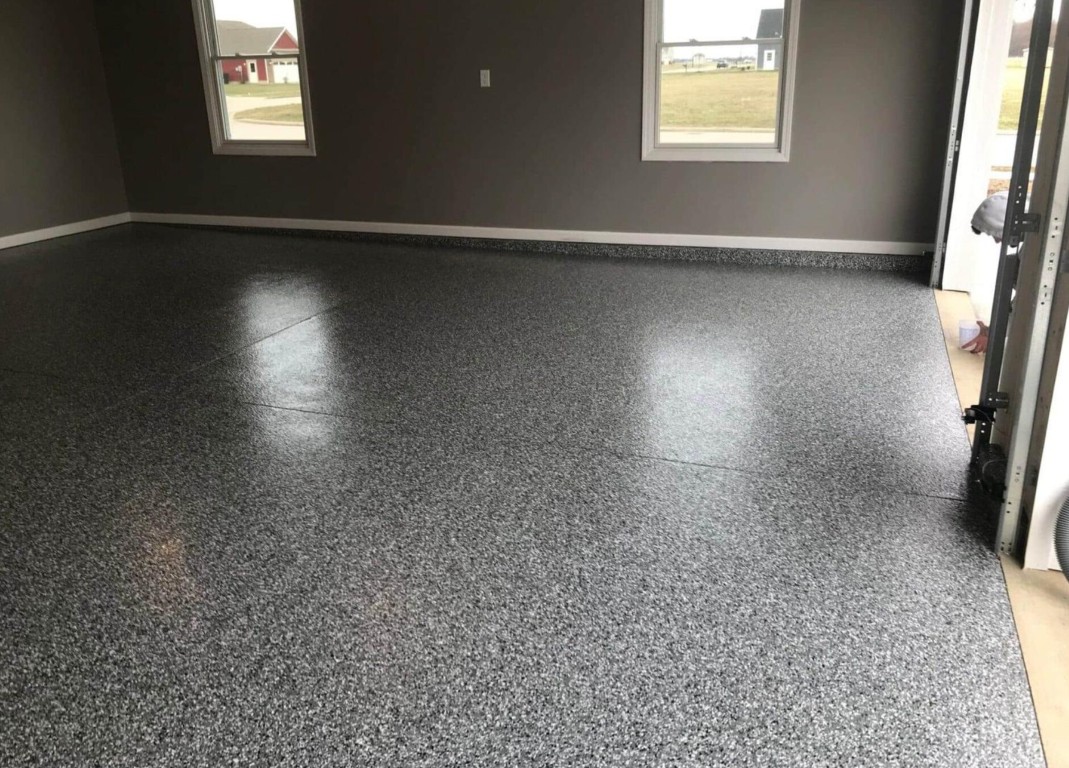
Decorative flakes add visual interest and texture to solid base colors. The flakes are small colored chips that we broadcast into the wet coating. They stick permanently and create a speckled, terrazzo-like appearance. Flake colors range from subtle grays and tans to bold multicolor blends. Full broadcast coverage hides the base color almost completely. Light broadcasts let more base color show through. Most customers choose medium broadcast density that provides color variation without overwhelming the base.
Metallic finishes create unique, flowing patterns that look three-dimensional. Metallic pigments are mixed into the coating and manipulated during application to create swirling designs. Each metallic floor ends up unique because the patterns cannot be exactly replicated. These high-end finishes cost more but create stunning garage floors that look like art installations. Metallic finishes work particularly well in garages that double as workshops or entertainment spaces.
Gloss level affects both appearance and practicality. High gloss finishes look sharp and reflect light beautifully. They make garages feel brighter. However, high gloss shows every speck of dirt and can be slippery when wet. Satin finishes provide some shine without the maintenance concerns of high gloss. Matte finishes look more subdued and hide dirt well. For garages used primarily for parking cars, we usually recommend satin finishes. They balance appearance with practicality. Similar to choosing finishes for patios, think about how you will use the space when selecting appearance options.
Frequently Asked Questions About Garage Floor Coatings
Homeowners considering garage floor coatings typically ask these questions: