Concrete Pool Decks
Create a beautiful, safe pool area with concrete decking that stays cool underfoot and complements your backyard oasis.
Why Concrete Makes Perfect Sense for Pool Decks
The area around your pool gets more use and abuse than almost any other outdoor surface. People walk on it constantly, often barefoot. Water splashes on it all day. It sits in direct sun absorbing heat. You need a material that handles these challenges while looking good and staying safe. Concrete delivers on all counts, which is why it remains the most popular pool deck material in Hacienda Heights.
Concrete pool decks offer practical advantages that matter when you are using your pool. The surface stays relatively cool even in summer heat, especially with light-colored finishes or textured surfaces. This makes it comfortable to walk on barefoot. Concrete also provides excellent slip resistance when properly textured, which is crucial for wet areas. And it drains water quickly rather than holding puddles that create hazards.
Durability is another major factor. Pool decks take constant exposure to water, sun, chlorine, and foot traffic. Wood decking rots and splinters. Pavers shift and grow weeds in the joints. Natural stone costs a fortune and still requires maintenance. Concrete handles these conditions year after year without deteriorating. Properly installed concrete pool decks last 25 to 30 years or more with basic care.
Modern concrete also offers tremendous design flexibility. You can create pool decks that look like natural stone, elegant tile, or unique custom designs. Colors, textures, and patterns let you match any backyard style from tropical resort to contemporary minimalist. We help Hacienda Heights homeowners create pool areas that are both beautiful and functional, turning their backyard into a true outdoor living space.
Pool Deck Design Options
Concrete pool decks range from simple and economical to elaborate custom designs. Here are the main options:
Broom Finish Pool Decks
A simple broom finish creates texture that provides good traction and costs less than decorative treatments. We drag a broom across the fresh concrete to create parallel lines that give feet something to grip. Broom finishes work well for pool decks because they are slip-resistant and easy to maintain. You can still add color to broom-finished concrete for visual interest without the cost of stamping or other decorative techniques.
The texture level can vary from light to aggressive depending on your needs. Light texture looks smoother and feels more comfortable barefoot. Aggressive texture provides maximum slip resistance but might feel rough on bare feet. We recommend a medium texture for most pool decks. It balances traction with comfort and looks clean and professional.
Stamped Concrete Pool Decks
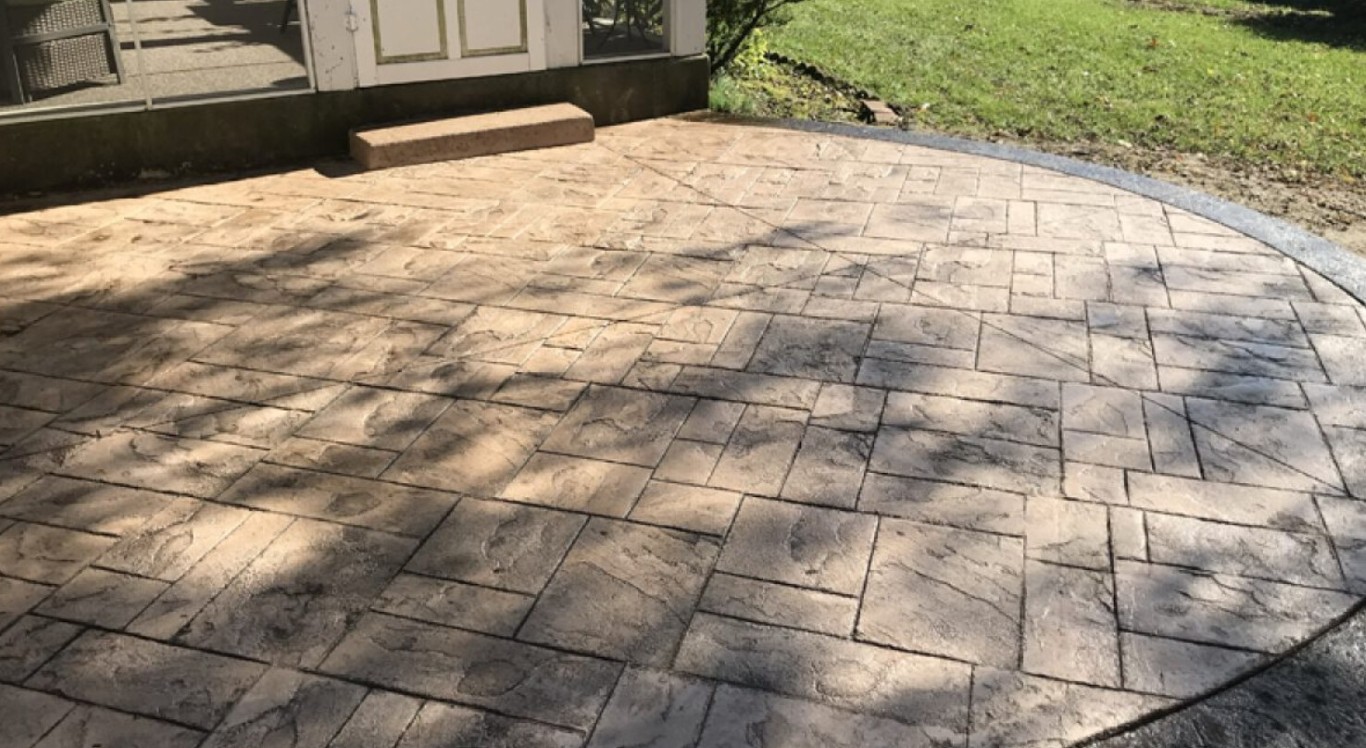
Stamped concrete creates the look of flagstone, slate, tile, or other premium materials at a fraction of the cost. The stamping process adds both pattern and texture. Popular pool deck patterns include natural stone looks that blend with landscaping, geometric tile patterns that create a resort feel, and wood plank designs that give a boardwalk appearance. Stamped concrete costs more than plain finishes but dramatically enhances your pool area's appearance.
We can combine stamped patterns with colors and borders to create truly custom designs. A stamped deck in earth tones with a contrasting border looks sophisticated and ties your pool area together visually. The texture created by stamping also provides excellent slip resistance, which makes stamped concrete both beautiful and practical for pool decks. If you want more details about stamped options, check out our comprehensive guide on stamped and decorative concrete.
Exposed Aggregate Pool Decks
Exposed aggregate reveals the decorative stones in the concrete mix, creating a textured, natural-looking surface. This finish is particularly popular for pool decks because it provides excellent traction, stays cooler than smooth concrete, and hides stains well. The texture feels interesting under bare feet without being uncomfortably rough. You can choose from different aggregate types and sizes to customize the appearance.
Exposed aggregate works especially well around pools because water actually enhances the appearance. When wet, the stones show their colors more vibrantly, which makes the deck look great whether dry or wet. The texture also prevents slip hazards that can occur with smoother finishes. Many resort pools use exposed aggregate for these practical benefits combined with upscale appearance.
Cool Deck and Textured Coatings
Special spray-applied coatings create textured surfaces that stay cooler than standard concrete. These products contain light-colored particles that reflect heat and materials that do not absorb as much thermal energy. The resulting surface stays comfortable to walk on even during hot Hacienda Heights summer days. Cool deck coatings can be applied to new or existing concrete, making them an option for pool deck renovations.
These coatings come in various colors and textures. Most create a slightly rough, pebbled surface that provides good traction. The coating is applied thick enough to hide minor surface imperfections in the underlying concrete. Cool deck products do require reapplication every 10 to 15 years as they wear, but this maintenance is straightforward and much cheaper than replacing the concrete.
Critical Safety and Comfort Features
Pool decks require special attention to safety and comfort because people use them barefoot and the surfaces stay wet frequently. Here are the key features we build into every pool deck:
- •Slip-resistant texture: Smooth concrete becomes dangerously slippery when wet. We create texture through stamping, broom finishing, exposed aggregate, or special coatings. The texture must be aggressive enough for safety but not so rough that it hurts bare feet. Getting this balance right takes experience.
- •Proper drainage slope: Pool decks need to slope away from the pool and any buildings. Standing water creates slip hazards and mosquito breeding grounds. We typically use a two percent slope, which is about a quarter inch per foot. This moves water effectively without being noticeable when walking.
- •Adequate width: The deck should extend at least four feet beyond the pool edge on all sides. This provides room for furniture, walking space, and safety clearance. Narrow decks feel cramped and limit how you can use your pool area. We help you plan dimensions that balance functionality with your yard size and budget.
- •Cool surface options: Dark concrete absorbs heat and becomes uncomfortable to walk on. Light colors reflect heat and stay cooler. Textured surfaces also stay cooler than smooth concrete. We recommend light-colored stamped or textured finishes for maximum comfort during summer months.
- •Rounded edges and corners: Sharp edges around pools create injury risks. We slightly round or bevel edges where people might sit or lean. This detail prevents cuts and makes the deck safer for children playing around the pool. The rounded edges also look more finished and intentional.
- •Control joints: Concrete expands and contracts with temperature changes. Control joints are deliberate grooves that guide where cracks occur if they develop. We cut joints in strategic locations so any cracks happen in planned spots rather than randomly across your deck. Properly placed joints keep cracks small and manageable.
Fencing and gates are required by code around pools. We coordinate deck construction with fence installation to ensure everything integrates properly. The deck elevation affects gate placement and function. Drainage must not direct water toward fence posts or gate mechanisms. These details matter for both code compliance and long-term functionality.
Pool Deck Installation Considerations
Building pool decks involves unique challenges compared to other concrete patio work. Here is what we address during installation:
Working around existing pools requires careful planning. We protect your pool from construction debris using covers and barriers. Equipment access can be challenging in tight backyards. We sometimes need to hand-carry materials or use smaller equipment that can fit through side gates. These logistics affect scheduling and cost, so we evaluate access thoroughly before providing estimates.
Underground utilities and plumbing run to most pools. We identify and mark these before excavating to avoid damage. Pool equipment, drains, and lights all have electrical and plumbing connections that must be protected during construction. We coordinate with your pool contractor or service company to understand where everything is located.
The existing grade and drainage patterns matter enormously. We might need to adjust elevations to ensure proper drainage. Sometimes this requires coordination with landscaping or hardscaping in other parts of your yard. Pool decks that drain toward your house or create low spots where water collects cause problems that are expensive to fix later. We get the grading right from the start.
Expansion joints between the deck and pool coping allow for movement without cracking. Concrete expands and contracts with temperature changes at different rates than pool materials. The joint between them needs to flex without allowing water infiltration. We use appropriate joint materials and sealants that maintain this separation while looking clean and finished.
Curing is especially important for pool decks because they will be wet frequently once in use. The concrete needs to cure fully before regular water exposure. We protect fresh concrete during curing and recommend waiting at least seven days before using the pool. Some chemical treatments should be avoided near new concrete for the first month. We provide specific guidance about protecting your new deck during the critical early period.
Frequently Asked Questions About Pool Decks
Homeowners planning pool deck projects usually ask these questions: