
Sidewalks, Walkways & Flatwork
Connect your outdoor spaces with durable concrete walkways that combine function with curb appeal.
Why Concrete Makes Perfect Sense for Walkways
Every home needs safe, stable paths connecting the driveway to the front door, the back door to the yard, or the patio to the garden. Concrete walkways handle this job better than almost any other material. They last decades without shifting or settling. They provide solid footing in all weather. And they require almost no maintenance beyond occasional cleaning.
Concrete walkways resist the problems that plague other materials. Pavers shift over time, creating uneven surfaces and trip hazards. Gravel paths get muddy and spread into surrounding areas. Wood chips need constant replenishment and turn slippery when wet. Flagstone costs a fortune and still develops gaps between pieces. Concrete gives you a permanent, level surface that stays put year after year.
The practical benefits extend beyond durability. Concrete handles our Hacienda Heights climate perfectly. It does not absorb heat like dark asphalt, so it stays cooler under summer sun. It drains water quickly rather than holding puddles. Snow and ice are rare here, but when we do get cold weather, concrete provides better traction than smooth stone or tile. These practical advantages make concrete the smart choice for most walkway applications.
Aesthetically, modern concrete offers more options than most people realize. Plain gray concrete works fine for utilitarian paths. But you can also add colors, textures, and patterns that make walkways a design feature rather than just a functional necessity. We help homeowners in Hacienda Heights create walkways that enhance their property's appearance while providing reliable pathways for daily use.
Types of Concrete Flatwork We Install
Flatwork is the concrete industry term for any horizontal concrete surface. This includes sidewalks, walkways, and various other applications around your property. Here are the most common types we install:
Front Entry Walkways
The path from your driveway or street to your front door makes the first impression on visitors. We typically make these walkways four to five feet wide, which gives two people room to walk side by side comfortably. Wider is better if your budget allows. The walkway should flow naturally from the driveway to the door without awkward angles or tight turns.
Front walkways are perfect candidates for decorative treatments. Since they are relatively small areas, adding stamped patterns or colored concrete does not cost too much. Many homeowners coordinate their front walkway with their driveway design using complementary colors or matching patterns. This creates a cohesive look that ties your front yard together.
Side Yard Access Paths
Narrow paths along the side of your house provide access to backyard areas or utility equipment. These typically run three feet wide, which is enough for one person and a wheelbarrow or lawn equipment. Side paths see less traffic than front entries, so simple broom finish concrete works well. Good drainage matters more here because side yards often channel water. We make sure these paths slope away from your foundation and do not create drainage problems.
Garden and Backyard Walkways
Paths through gardens or connecting different backyard areas can be narrower and more casual. These walkways often curve to create visual interest and work around landscaping. We can make them as simple or decorative as you want. Exposed aggregate or lightly textured finishes work particularly well for garden paths because they look natural and blend with plantings.
Public Sidewalks
If you need to replace the sidewalk in front of your house, we handle the permit process and build to city specifications. Public sidewalks have specific requirements for width, thickness, and slope. We know these requirements for Hacienda Heights and surrounding areas. We also coordinate with the city for inspections and make sure everything meets code before we finish the job.
Commercial Flatwork
Business properties need walkways that handle heavier traffic and meet ADA accessibility requirements. We build commercial walkways with proper slopes for wheelchair access, detectable warning surfaces where needed, and extra durability for constant use. Commercial flatwork requires more planning and thicker concrete than residential work, but we have the experience to handle projects of any size.
Design Considerations for Great Walkways
A well-designed walkway considers both practical needs and visual appeal. Here are the factors we discuss with every customer:
- •Width matters: Narrow paths feel cramped and limiting. We recommend at least three feet for utility paths, four feet minimum for main walkways, and five feet for front entries. Wider paths cost more but feel more welcoming and comfortable to use.
- •Slope and drainage: Walkways need a slight slope so water drains off instead of pooling. We typically use a two percent grade, which is enough to move water but not so steep that you notice when walking. The path should never slope toward your house or create drainage problems in surrounding areas.
- •Thickness requirements: Most walkways are four inches thick, which handles normal foot traffic easily. If vehicles might cross the walkway, we increase thickness to match driveway specifications. Thicker concrete costs more but prevents cracking from vehicle weight.
- •Surface texture: Smooth concrete looks elegant but can be slippery when wet. We usually recommend a light broom finish that provides traction without looking rough. For steeper slopes or areas that get wet often, more aggressive texture improves safety.
- •Curves versus straight lines: Straight walkways use space efficiently and cost less to form and pour. Curved paths create more visual interest and can work better with landscaping. We can do either, but curves add some cost for the extra forming and finishing work they require.
- •Borders and edging: Clean edges make walkways look finished and professional. We can create different edge treatments from simple straight cuts to rounded or decorative borders. Borders in contrasting colors add definition without much extra cost.
We also consider how your walkway integrates with existing features. It should connect naturally to your patio, driveway, or other concrete surfaces. Mismatched heights or abrupt transitions create trip hazards and look unfinished. We plan transitions carefully so everything flows together smoothly. Lighting is another consideration. If your walkway will be used after dark, plan for landscape lighting or fixtures that illuminate the path safely.
Installation Process for Durable Walkways
Installing walkways follows the same basic process as other concrete work, but the narrow dimensions require extra attention to detail. Here is how we build walkways that last:
Layout comes first. We mark the walkway path with stakes and string, making sure the route makes sense and the width stays consistent. We check that slopes will drain water correctly and that the walkway connects properly to existing surfaces. Getting the layout right prevents problems later, so we take time to get it perfect before digging.
Excavation removes soil to the proper depth for base material and concrete. We dig slightly wider than the finished walkway to give us room to work. The excavated area gets graded with a slight slope for drainage. Any soft spots or unsuitable soil gets removed and replaced with compacted fill. The subgrade needs to be firm and stable before we add base material.
Base installation provides support and drainage. We typically use four inches of crushed rock that gets compacted thoroughly. The base extends slightly beyond the walkway edges to provide edge support. Proper compaction is critical because settling base causes cracked concrete above. We compact in layers and test compaction levels to make sure they meet standards.
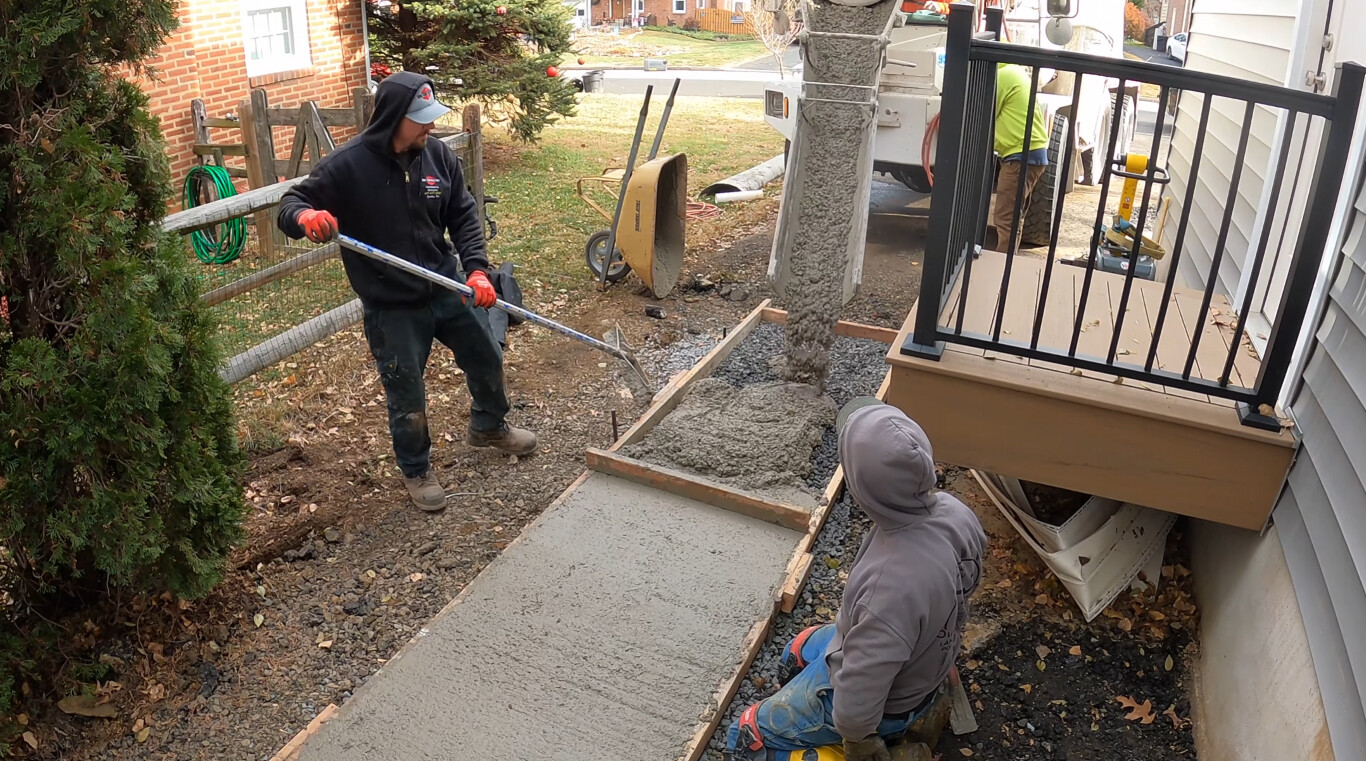
Form building creates the shape and edges of your walkway. We use wood or metal forms set at the exact height and slope needed. The forms must be secure and straight because they determine the final appearance. We pay special attention to curves, making sure they are smooth and consistent. Good forming is what separates professional work from amateur jobs.
Pouring and finishing happens quickly once concrete arrives. We spread it evenly, screed it level with the forms, then finish the surface. The finishing process creates the texture and appearance you chose. We cut control joints at regular intervals to control where cracks occur if they develop. After finishing, we protect the concrete while it cures. Walkways typically need seven days before regular use.
Frequently Asked Questions About Concrete Walkways
Homeowners considering new walkways usually have similar questions. Here are the answers: