Concrete Slab & Foundation Work
Professional foundation and slab services that give your home or business a solid base to last for decades.
Why Your Foundation Matters More Than You Think
Your foundation is literally what holds everything else up. Whether you are building a new home, adding a room, or starting a commercial project in Hacienda Heights, the quality of your concrete slab and foundation work determines how long your structure will last. We have seen too many cases where shortcuts in foundation work lead to expensive repairs down the road. Cracks in walls, uneven floors, and doors that will not close properly often trace back to foundation issues.
That is why we take foundation work seriously. Every project starts with proper site preparation. We grade the soil, compact it correctly, and make sure drainage will not cause problems later. Then we install the right rebar reinforcement based on your soil type and building requirements. The Hacienda Heights area has specific soil conditions that we know well after years of working here. Some neighborhoods have expansive clay soil that needs extra attention. Others have better conditions but still require proper engineering.
The concrete mix itself needs to match your project. We use the right strength concrete for foundations, which is different from what you would use for a driveway. Foundation concrete needs specific characteristics to handle the weight of your structure and resist moisture from the ground. We source our concrete from local suppliers who meet strict quality standards, and we test it regularly to make sure you are getting what you paid for.
Types of Concrete Slabs We Install
Not all concrete slabs are built the same way. The right choice depends on your soil conditions, budget, and the guidance of a skilled concrete slab contractor who knows your site. Here are the main types we work with in Hacienda Heights:
Slab-on-Grade Foundations
This is the most common foundation type for homes and light commercial buildings in our area. The concrete slab sits directly on the ground, with a gravel base underneath for drainage. We pour it all at once, which makes it cost effective and fast to install. Slab-on-grade works great in Hacienda Heights because we do not deal with freezing ground like they do in colder climates.
Before we pour, we install moisture barriers to keep ground water from seeping up through the concrete. We also embed any necessary plumbing and electrical conduits right into the slab. This saves money compared to running utilities later. The edges of the slab get thickened and reinforced to create a footing that supports your exterior walls.
Raised Foundation Slabs
When the building site has drainage concerns or uneven terrain, a raised slab makes more sense. We build forms above ground level, which lets water drain away naturally. This type costs more because it requires more concrete and formwork, but it solves problems that would be expensive to fix later. Raised slabs work well for properties with slopes or areas where the water table sits high.
Post-Tension Slabs
For larger buildings or challenging soil conditions, post-tension slabs provide extra strength with less concrete. We install steel cables through the slab, then tension them after the concrete cures. This puts the slab under compression, which helps it resist cracking. Post-tension slabs cost more upfront but can save money on larger projects by using less concrete and requiring fewer expansion joints.
Our Foundation Installation Process
We follow a systematic approach that has been refined over years of foundation work in the Hacienda Heights area. Here is what you can expect when you hire us for your foundation project:
First, we excavate to the proper depth and make sure the soil is stable. If we find soft spots or unsuitable soil, we remove it and replace it with engineered fill. This extra step prevents settling that could crack your foundation later. We compact the soil in layers using heavy equipment, testing as we go to hit the required compaction levels.
Next comes the gravel base layer. This typically runs four to six inches thick and provides drainage and a stable surface for the concrete. We use crushed rock rather than round gravel because it compacts better and will not shift. Then we install the moisture barrier, overlapping the seams and sealing them properly. Any tears or gaps in this barrier can let moisture through, so we inspect it carefully.
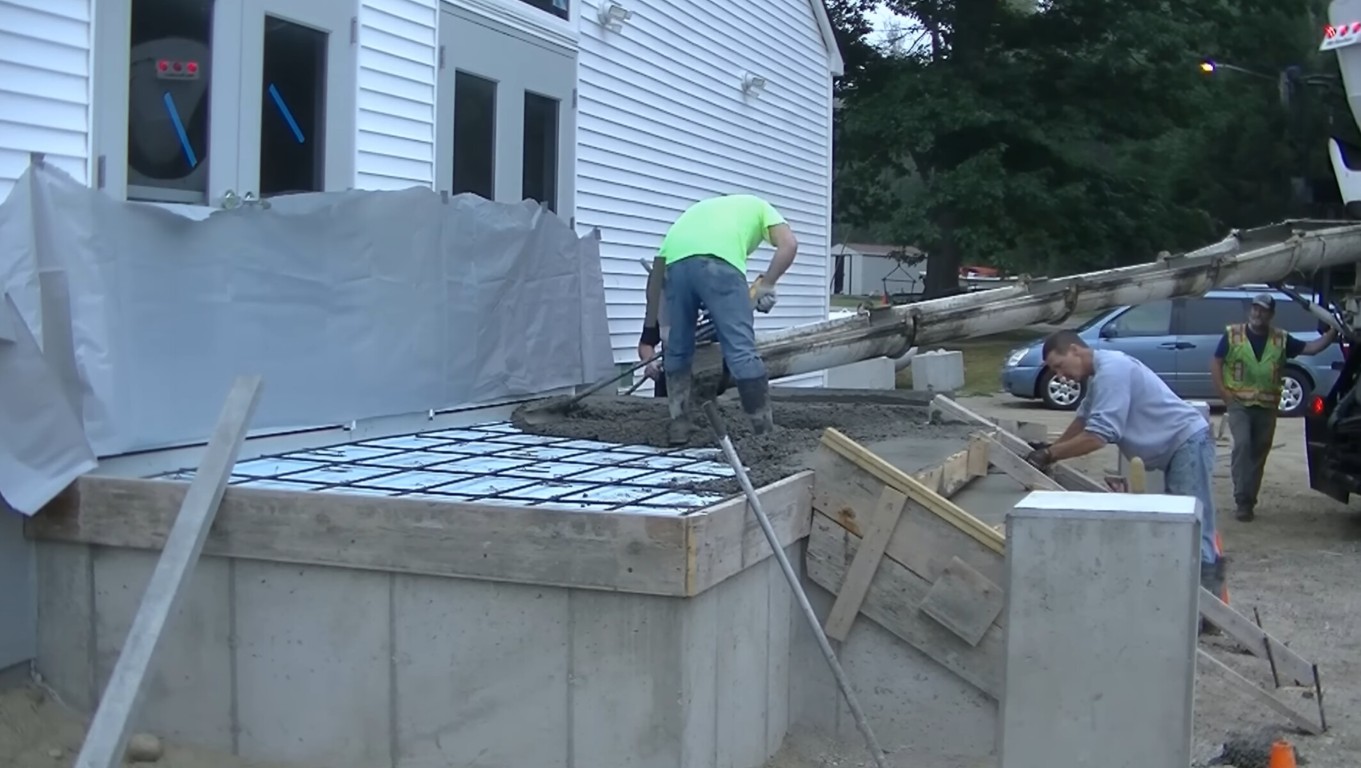
The rebar installation follows engineering specifications. We tie the bars together at the correct spacing and use chairs to hold them at the right height in the slab. Rebar that sits on the ground does not do its job, it needs to be suspended in the middle of the concrete. We also install any required plumbing rough-ins and electrical conduits at this stage.
Pour day requires coordination and speed. Concrete trucks arrive on schedule, and our crew spreads and finishes the concrete before it starts to set. We use laser levels to make sure the slab is flat and pitched correctly for drainage. The finishing process creates a smooth surface that is ready for flooring later. After the pour, we apply curing compound and protect the slab while it gains strength.
What Makes a Foundation Last
A properly built foundation should last as long as your building does. The key factors that determine longevity are proper drainage, correct concrete mix, adequate reinforcement, and good construction practices. Let us break down what matters most:
- •Drainage control: Water is the biggest enemy of foundations. We make sure water flows away from your slab, not toward it. This includes proper site grading, installing drainage systems where needed, and protecting the foundation perimeter.
- •Concrete quality: We use 3000 PSI concrete minimum for foundations, often higher for commercial work. The concrete needs the right water-to-cement ratio and proper curing to reach full strength.
- •Reinforcement placement: Steel rebar gives concrete its tensile strength. We follow the structural engineer's plans exactly, because moving rebar even a few inches can weaken the foundation significantly.
- •Soil preparation: The ground under your slab needs to be stable and properly compacted. We test compaction levels to make sure they meet code requirements. Shortcuts here lead to settling and cracks.
- •Curing time: Concrete takes 28 days to reach full strength. We protect fresh concrete from drying too fast, freezing, or getting disturbed during this critical period. Rushing this process weakens your foundation permanently.
In Hacienda Heights, we also deal with seismic considerations. California building codes require specific reinforcement details to help foundations resist earthquake forces. We stay current on these requirements and build to the latest standards. Your concrete foundation needs to flex slightly during seismic activity without cracking or failing. Proper rebar placement and concrete quality make this possible.
Another factor that affects longevity is protection during construction. Once your foundation is poured and cured, it still needs protection until the building is finished. We recommend installing temporary drainage and covering exposed edges to prevent damage. Simple protection measures now prevent expensive repairs later.
Common Questions About Concrete Foundations
We get asked a lot of questions about foundation work. Here are the answers to the most common ones: